Home/Ingredients/Pomegranate
Ingredient 5 of 6
Pomegranate
The quietest entry on the label, and the one this page is least worried about. It is here for polyphenols and nothing else.
Where Pomegranate Comes From
Pomegranate is one of the oldest cultivated fruits, grown across the Middle East, the Mediterranean and now California. The edible part is the arils — the seed sacs — and the juice pressed from them.
The compounds supplement makers want are punicalagins, a group of large polyphenols found mostly in the rind, and ellagic acid, which the gut produces from them. Extracts are usually standardised to a punicalagin or ellagic acid percentage.
Pomegranate is also, straightforwardly, one of the higher-polyphenol foods available. That is not marketing; it is what the food composition tables say.
One of six names in every Alkatide gummy
Verdict: Strong as antioxidant nutrition. No weight claim is made or supported.
Its Job In This Formula
Antioxidant intake, and that is the whole of it. Polyphenols contribute to the body handling of oxidative stress, and pomegranate is a dense source of them.
There is no appetite mechanism here, no metabolic claim and no place in the craving story that the rest of this label is built around. It is a nutrition ingredient in a product that is otherwise about appetite.
It pairs with Green Tea Extract, which brings polyphenols of a different class, and sits alongside Vitamin B6, which is the other entry here with a settled nutritional role. Together those three are the least arguable part of the panel.
How Good Is The Evidence?
Antioxidant content: strong. Measurable, repeatedly confirmed, and not really disputed by anyone.
Blood pressure: promising but modest. Several trials of pomegranate juice report small reductions in systolic pressure. Juice, in useful daily volumes, not an extract inside a gummy.
Cholesterol and arterial health: mixed. Some encouraging early work, inconsistent replication, and nothing settled enough to put on a label.
Weight or appetite: nothing. There is no meaningful human evidence that pomegranate affects either, and this page is not going to invent any.
The gap here is the same as everywhere else on this panel. The cardiovascular trials used daily juice volumes; a fraction of an extract in a shared gummy is a different proposition and should be read as a polyphenol contribution, not a treatment.
Dose, Timing And What Is Printed
Trials have used anywhere between 250 ml of juice daily and 500 to 1,000 mg of standardised extract. What ends up in a six-ingredient gummy will be at the low end of that or below it.
Look for a punicalagin or ellagic acid percentage on the panel. "Pomegranate extract" with no standardisation figure is the weakest way an ingredient can be declared, and it is common across the category.
No timing rules apply. Polyphenol intake is not clock-sensitive, so this ingredient does nothing to change the morning routine on the daily use page.
Who Should Check First
Blood pressure medication. Because of the small blood pressure effect, anyone taking medication for hypertension should mention it. Additive effects are the reason, not a known danger.
Enzyme interactions. Pomegranate has been investigated for effects on the same enzyme systems as grapefruit, which handle a long list of prescriptions. The evidence is much weaker than for grapefruit, and it is still worth a mention to a pharmacist if you take anything with a grapefruit warning.
Allergy. Rare, but pomegranate allergy exists. Anyone who reacts to the fruit should avoid the extract.
Pregnancy. The fruit is food. Concentrated extracts have less safety data behind them, so the usual advice applies.
Two Things It Is Not
Not a superfood answer. High polyphenol content is a good thing and it is not a health strategy. A varied diet with several coloured plants in it does more than any single extract.
Not why you are buying this product. If pomegranate is the ingredient that sold you on this bottle, buy pomegranate juice instead. It will cost less and deliver more.
This is not medical advice. Any prescription, pregnancy, breastfeeding or diagnosed condition means a word with a doctor or pharmacist before a first gummy. The full interaction table is on the safety page.
Pomegranate: What People Ask
Questions about this ingredient specifically.
What do punicalagins do?
They are large polyphenols with measurable antioxidant activity, which the gut converts into ellagic acid and then into urolithins. Beyond antioxidant intake, the human outcome evidence is early.
Is pomegranate extract as good as the juice?
For punicalagin content, an extract can be more concentrated. For the blood pressure trials, the evidence is about juice in daily volumes, so an extract is not a substitute for what those studies showed.
Does pomegranate help with weight?
There is no meaningful human evidence that it does, and this site does not claim it. It is on the label for antioxidant intake.
Can it interact with medication?
Possibly with blood pressure medication through additive effects, and there is weak evidence around the same enzyme systems grapefruit affects. Mention it to a pharmacist if you take anything with a grapefruit warning.
Is there enough of it in a gummy to matter?
As a polyphenol contribution, some. As anything resembling the doses used in cardiovascular trials, no. Read it as nutrition rather than as an intervention.
The Other Five
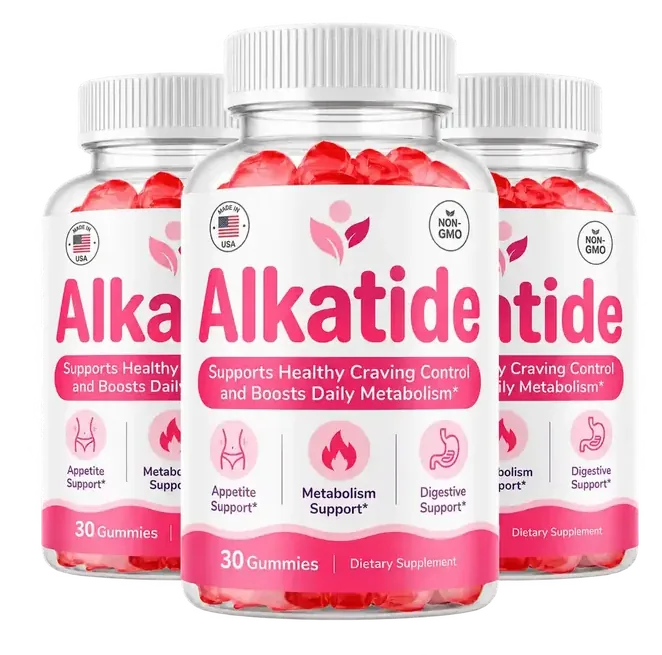
Alkatide: Six Names, One Gummy A Day
No powder to mix, no capsule to swallow, and a page for every ingredient so nothing gets bought blind.
- Chewable, so there is nothing to swallow
- Chromium carries its own printed amount
- Free US delivery on the 3 and 6 bottle packs
- Sixty days to send it back, opened bottles included